Are Card Games a Hobby?
For many people, hobbies are the small joys that break up the routine of daily life—things we do because they’re fun, relaxing, or meaningful. Some people collect vinyl records. Others bake, garden, or build model kits. And then there are those who reach for a deck of cards. But that raises a surprisingly interesting question: are card games a hobby?
At first glance, it might feel too simple to call card games a hobby. They seem casual, maybe even old-fashioned, something you do to pass time at a family gathering. But the truth is, card games have evolved far beyond the living-room stereotype. Today, they span from classic 52-card games to competitive tournament scenes, online platforms, and social groups that meet weekly.
So yes—card games can absolutely be a hobby. But the reasons why go much deeper than most people realize. Before we explore them, it’s useful to understand the broader context of What Are Card Games?, because card games are far more diverse and dynamic than the average deck might suggest.
Let’s break down how card games become a true hobby, why so many people enjoy them, and what keeps the passion alive for generations.
What Makes Something a Hobby?
To know whether card games count as a hobby, we need to define what a hobby actually is.
A hobby is:
-
an activity done regularly,
-
for pleasure,
-
and not for work or obligation.
That’s it. No complex criteria, no minimum skill requirement. A hobby doesn’t need to be expensive or impressive. Knitting is a hobby. Reading is a hobby. Collecting stones can be a hobby.
Card games easily fit these criteria for millions of people. They’re enjoyed regularly, chosen voluntarily, and provide mental stimulation, entertainment, and social connection. And just like any other hobby, you can engage casually or dive deeper depending on your passion.
Why Card Games Fit Perfectly as a Hobby
There are several reasons why card games naturally evolve into a hobby for so many people around the world.
1. They’re Accessible and Affordable
Most hobbies need equipment, supplies, or memberships. Card games require one thing: a deck of cards—cheap, portable, and universally available. That makes card games one of the most accessible hobbies on the planet.
2. They’re Easy to Start, Hard to Master
The best hobbies offer depth. Card games like Rummy, Poker, Spades, or even Solitaire can be learned in minutes, but mastering them can take a lifetime.
That slow journey of improvement—learning patterns, reading situations, practicing probability—gives players a sense of progress, which is a huge factor in hobby satisfaction.
3. They Bring People Together
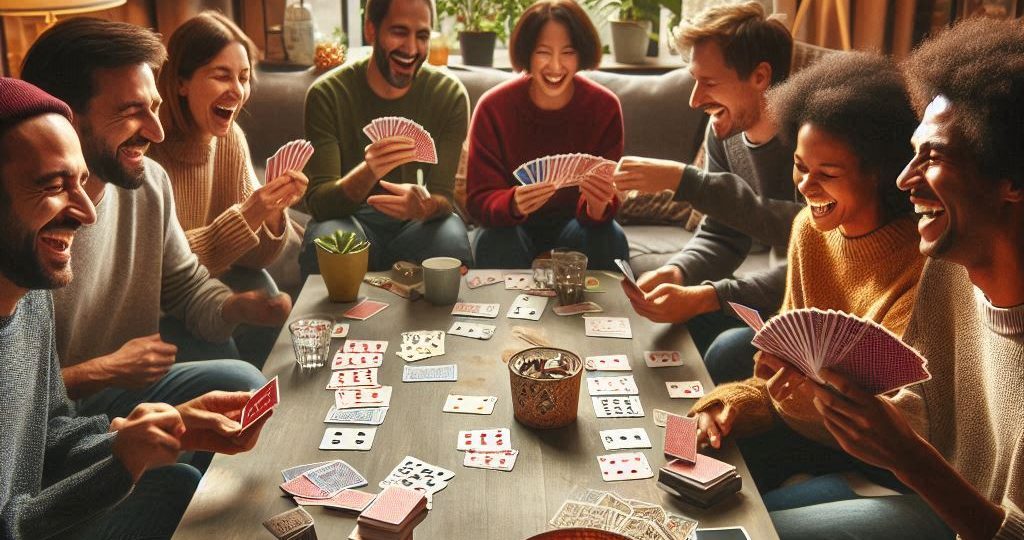
Card-game nights are a ritual in many households. People form habits around meeting up to play:
-
weekly Poker nights,
-
family UNO marathons,
-
casual lunchtime games at work,
-
online matches with friends across the world.
A hobby with a social component tends to be more emotionally rewarding.
4. They Stimulate the Brain
Card games improve:
-
memory,
-
decision-making,
-
pattern recognition,
-
focus,
-
emotional control.
Many hobbies focus on relaxing the mind, but card games offer a unique blend of relaxation and cognitive challenge. That combination keeps them interesting for years.
5. They Adapt to Technology and Culture
Card games have survived centuries because they constantly evolve. Today, people treat digital card games as a full hobby ecosystem, with platforms like:
-
MTG Arena,
-
Hearthstone,
-
Pokémon TCG Online,
-
Gwent,
-
Legends of Runeterra,
-
online Poker rooms,
-
mobile Solitaire apps with ranked ladders.
Card games now exist in every format—physical, digital, casual, competitive, collectible, and cooperative. No matter your lifestyle or preferences, there’s a version of the hobby that fits you.
Different Ways People Treat Card Games as a Hobby
Not everyone enjoys the hobby the same way. That’s what makes card games so flexible.
Casual Home Players
These are people who play whenever the chance arises. Maybe it’s a weekly family night or a spontaneous round of Go Fish with kids. For them, card games are simple stress relief and togetherness.
Strategy Lovers
Some players dig deep into:
-
probability,
-
bluffing theory,
-
pattern recognition,
-
advanced strategy.
They may not compete professionally, but they treat card games intellectually, much like chess enthusiasts.
Collectors
Trading card games introduced an entirely different type of hobbyist: the collector. Their interest is in:
-
rare cards,
-
deck-building,
-
limited editions,
-
artwork,
-
card preservation.
This hobby layer can be as deep as collecting coins or comics.
Competitive Players
For some, card games are a mental sport. They participate in:
-
tournaments,
-
local club events,
-
ranked online ladders,
-
professional circuits.
Games like Poker, Bridge, MTG, and Yu-Gi-Oh! have global competitive scenes with serious players who train regularly.
Solo Hobbyists
Solitaire players—especially those who enjoy specialized variants like Spider, FreeCell, Pyramid, or Russian Bank—take joy in improving their personal times, clearing difficult setups, and exploring new puzzles.
Why Card Games Outlast Many Other Hobbies
Some hobbies rise and fade quickly. Card games don’t. They have remained relevant for centuries across nearly every culture. Why?
They’re Timeless
A card deck from 1850 works exactly the same today. No updates, patches, or redesigns required.
They’re Universal
Every generation plays them. Parents pass them down. Grandparents teach kids. No hobby keeps age groups connected like this.
They’re Portable
A deck fits in your pocket. You can start a game anywhere—traveling, waiting, camping, or staying home.
They’re Infinitely Variational
One deck = hundreds of possible games.
No other hobby offers so much variety from one simple tool.
Card Games as a Mental Escape
In a world full of screens, deadlines, and mental fatigue, card games give people a focus that’s refreshing but not overwhelming. Whether it’s a quiet round of Solitaire or a lively game of Speed, card games shift the mind into a more relaxed and playful mode.
That’s exactly what hobbies are meant to do.
Card Games as a Social Ritual
Many hobbies thrive because they encourage repeated gatherings—think of bowling leagues, book clubs, or dance classes. Card games create the same sense of continuity. People schedule entire evenings around them, not because the rules are complex but because the experience brings people closer.
Friendships, family bonds, and traditions form around simple decks of cards. A hobby that strengthens relationships tends to last.
The Competitive Side of the Hobby
Not all hobbies stay casual. Some evolve into structured competitive pursuits. Card games have some of the strongest competitive ecosystems in the world.
Poker Tournaments
With televised events, professional players, and million-dollar prizes, many people treat poker as a serious discipline. It demands study, strategy, self-control, and mental endurance—not unlike chess or esports.
Bridge Clubs and Championships
Bridge is one of the deepest strategic card games ever created, complete with global tournaments, ranking systems, and dedicated clubs.
Trading Card Game Circuits
MTG, Yu-Gi-Oh!, and Pokémon have:
-
national tournaments,
-
world championships,
-
pro leagues,
-
sponsorship opportunities,
-
dedicated communities.
For these kinds of players, card games aren’t just a hobby—they become a passion.
Do Card Games Count as a “Real” Hobby? Absolutely.
Some people hesitate to call card games a real hobby because they think hobbies must involve collecting, crafting, or physical activity. But card games check every box:
-
practiced regularly,
-
enjoyable to perform,
-
skills improve over time,
-
social or solitary engagement,
-
meaningful personal satisfaction.
Card games are every bit as legitimate as painting, golf, knitting, or any widely accepted hobby. They’re simple to start and endlessly deep once you dive in.
So, are card games a hobby?
Yes—without question.
In fact, card games are one of the most versatile, long-lasting, affordable, and universally accessible hobbies in the world. They bring together families, challenge the mind, create communities, and offer endless replay value. You can enjoy them casually or competitively, alone or in groups, online or in person.
A single deck of cards can unlock hundreds of experiences.
A single hobby can open the door to a lifetime of enjoyment.